This guide is part of our Commercial Cleaning Services resource library — helping facility managers stay compliant across OSHA, HIPAA, CMS, and state regulations.
What Is Terminal Cleaning in a Dental Office?
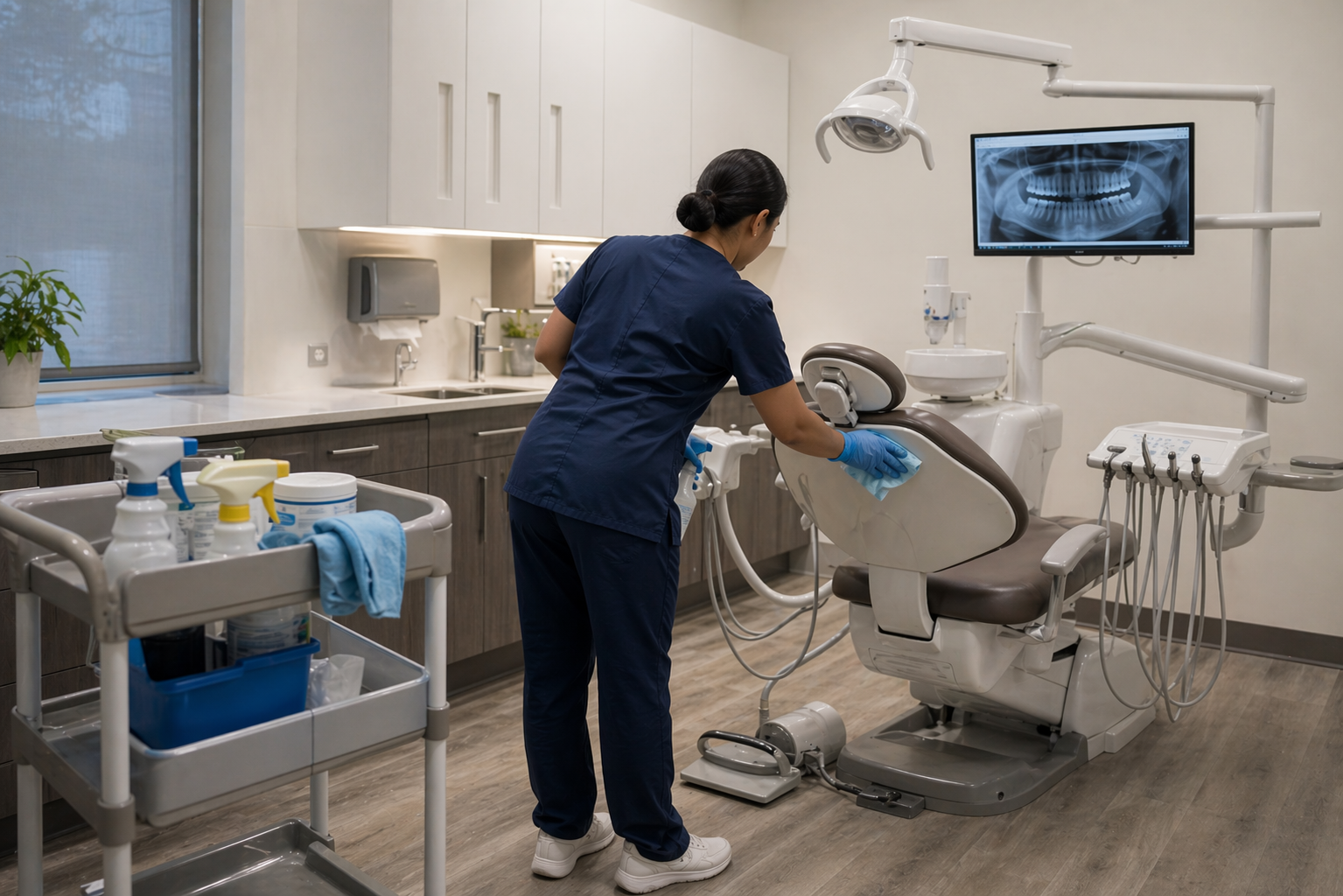
In a dental practice, daytime room turnover between patients only addresses immediate clinical contact surfaces (chair headrests, bracket tables, light handles, and suction lines). Terminal cleaning is the comprehensive, end-of-day top-to-bottom decontamination of every operatory, sterilization lab, imaging suite, restroom, and reception zone after the final patient leaves. Because ultrasonic scalers and high-speed handpieces generate aerosolized blood, saliva, and microbial bio-burden that settle up to 6–8 feet across cabinetry and floors, CDC Guidelines for Infection Control in Dental Health-Care Settings (DHCP) and OSHA's Bloodborne Pathogen Standard (29 CFR 1910.1030) require systematic nightly environmental sanitation.
Zone 1: Dental Operatories (Nightly Terminal Protocol)
Every dental operatory must be cleaned from high-to-low and clean-to-dirty using a dedicated Yellow microfiber cloth and mop head (never reused in restrooms or common areas):
- Dental Chair Upholstery Protection — Never apply sodium hypochlorite (bleach), high-concentration alcohol, or unapproved quaternary ammonium sprays directly to A-dec, Belmont, or Pelton & Crane vinyl/leather dental chairs. Clinical staff handle barrier changes and manufacturer-approved chair wipes; nightly terminal crews disinfect the chair base, rheostat foot controls, and surrounding floor perimeter
- Operatory Cabinetry, Countertops & Sinks — Wipe and disinfect all non-instrument countertops, glove/towel dispensers, sink basins, and hands-free faucets using an EPA List N intermediate-level (tuberculocidal) disinfectant with verified wet dwell time (typically 3–10 minutes)
- Curing Lights, X-Ray Pass-Throughs & Lead Aprons — Sanitize exterior housing of wall-mounted X-ray control panels, lead apron hangers, and computer keyboards/mice
- Biohazard & Sharps Perimeter Check — Verify red-bag biohazard waste and wall-mounted/countertop sharps containers are sealed and below the fill line; never reach inside containers
- Hard Floor Decontamination — Dust-mop and wet-mop VCT, LVT, or sheet vinyl operatory floors from the back wall toward the entry door using a fresh microfiber pad per operatory group and hospital-grade neutral disinfectant
Zone 2: Sterilization Lab & Instrument Processing Suite
The central sterilization area is the compliance heart of any dental practice. Cleaners must strictly respect the one-way workflow from Receiving/Decontamination (Dirty) to Packaging/Autoclave/Storage (Clean):
- Strict Clean-to-Dirty Sequence — Always wipe and mop the Clean/Sterile storage side first before moving to the Ultrasonic/Decontamination sink side to prevent back-contamination
- Autoclave & Ultrasonic Exterior Perimeter — Clean counter surfaces surrounding autoclaves and ultrasonic cleaners without disturbing sterile pouches, biological spore test incubators, or chemical indicator logs
- Hands-Free Sinks & Eyewash Stations — Disinfect deep utility sinks, splash guards, and verify clear floor access around the OSHA-mandated emergency eyewash station
- Amalgam Separator & Trap Area Awareness — Per EPA 40 CFR Part 441 (Dental Effluent Guidelines), never dump mop bucket water or harsh oxidizing chemicals down clinical vacuum lines or amalgam separator traps
Zone 3: Panorex / CBCT Imaging, Consult Rooms & Reception
Patient case acceptance for implants, veneers, and Invisalign is heavily influenced by visible and olfactory cleanliness in your non-clinical zones:
- CBCT / Panorex Suite — Disinfect chin rests, bite-block holders (non-clinical exterior), lead apron racks, and glass viewing windows
- Treatment Coordinator & Consult Offices — Dust and sanitize presentation monitors, consultation tables, and guest seating
- Waiting Room & Front Desk Check-In — Disinfect iPad check-in kiosks, pens, clipboard surfaces, door push-plates, coffee/beverage stations, and waiting room chair armrests using Green microfiber cloths
- Patient & Staff Restrooms — Full Red-coded microfiber sanitation of toilets, urinals, sinks, mirrors, and floor drains, plus automated restocking of Georgia-Pacific soap, sanitizer, and paper towel dispensers
Why NFC Zone Verification Replaces Paper Checklists
Paper cleaning logs taped to the back of a supply closet door are routinely bulk-signed at the end of the week and fail scrutiny during state dental board or OSHA inspections. XIRI mounts tamper-proof NFC tags in each zone of your dental office (Operatories, Sterilization Lab, Restrooms, Waiting Room). Cleaners must physically tap their smartphone at each zone to unlock that zone's checklist and confirm EPA List N dwell times and OSHA PPE compliance — generating a timestamped morning report for the Dentist-Owner and Dental Office Manager.