This guide is part of our Commercial Cleaning Services resource library — helping facility managers stay compliant across OSHA, HIPAA, CMS, and state regulations.
Why You Need a Quality Inspection System
**Up to 30% of commercial cleaning visits have some form of quality issue** — from skipped rooms to incomplete task completion. The problem isn't that cleaning companies don't care; it's that most buildings lack a structured quality verification system. Without one, quality degrades over time through a predictable cycle: the first month is excellent (the vendor is proving themselves), months 2–3 are good, and by month 6, corners are being cut because no one is checking. This inspection checklist breaks that cycle by giving you a standardized, repeatable way to evaluate cleaning quality across every area of your facility.
How to Use This Checklist
This checklist is designed for building managers, property managers, and tenants who want to evaluate their cleaning vendor's performance objectively.
- Scoring System — Rate each item on a 1–5 scale. 5 = Excellent (exceeds expectations). 4 = Good (meets expectations). 3 = Acceptable (minor issues). 2 = Below Standard (noticeable problems). 1 = Unacceptable (task was not performed)
- Inspection Frequency — Conduct full inspections monthly for the first 3 months of a new vendor relationship, then quarterly once a consistent score is established. Spot-check restrooms and high-traffic areas weekly
- Inspection Timing — Inspect in the morning, before the building gets occupied, when you can see the results of the previous night's cleaning without interference from daily use. Arrive between 7:00–8:00 AM for best results
- Documentation — Record scores, take photos of any deficiencies, and share results with your cleaning vendor within 24 hours. Track scores over time to identify trends (improving, stable, or declining)
- Benchmark — A building scoring 4.0 or above consistently has an excellent cleaning program. Scores between 3.0–3.9 indicate acceptable but improvable service. Scores below 3.0 warrant a vendor performance meeting and potential contract review
Restroom Inspection (Highest Priority)
Restrooms are the #1 area where cleaning quality is noticed by building occupants. A clean restroom builds confidence; a dirty one destroys it instantly. Inspect every restroom in the facility.
- Toilets and Urinals — Are bowls clean inside and out? Check under the rim. Are urinal screens fresh? Are there any stains or mineral deposits? Is the area around the base of each toilet clean (this is where most cleaning crews cut corners)?
- Sinks and Countertops — Are sinks free of soap residue, hair, and water spots? Are countertops wiped clean and dry? Check faucet handles and the area behind the faucet — common missed spots
- Mirrors — Are mirrors streak-free? Check from multiple angles — streaks are often only visible from certain viewing angles. Are there any water spots or splatter marks?
- Supplies — Are paper towel dispensers full? Is toilet paper stocked in every stall (check backup rolls too)? Is hand soap full? Are seat cover dispensers stocked? Running out of supplies is the #1 restroom complaint from building occupants
- Floors — Are floors mopped and dry? Check corners and behind toilets — these areas are frequently skipped. Look for grout discoloration indicating irregular deep cleaning. Is there standing water around sink areas?
- Trash — Are trash receptacles emptied with fresh liners? Is there overflow or trash on the floor near receptacles? Are sanitary disposal units empty and clean?
- Odor — Does the restroom smell clean and neutral? Persistent odor indicates inadequate cleaning — not just masking with deodorizer. Check for mildew smell from floor drains
- Fixtures and Partitions — Are toilet partitions and door handles wiped clean? Are flush handles clean? Are paper towel dispensers and soap dispensers clean on the exterior? Are air vents above restrooms free of dust?
Office and Workspace Inspection
Office areas should feel fresh and tidy when employees arrive in the morning. Focus on surfaces that accumulate overnight dust and the areas that cleaning crews commonly skip.
- Desks and Work Surfaces — Are desks wiped clean? Check for dust accumulation on monitors, phone handsets, and keyboard edges. Note: many cleaning contracts specify that personal items are not moved — verify what your contract allows
- Trash and Recycling — Are all desk-side trash and recycling bins emptied with fresh liners? Check under desks for missed bins. Are shred bins empty (if in scope)?
- Vacuuming — Are carpeted areas vacuumed with visible track marks? Check edges along walls and under desk returns — these areas show whether edge vacuuming was performed. Look for visible debris that should have been captured
- Hard Floor Surfaces — Are mopped floors clean without streaks or residue? Check corners and along baseboards. Look for scuff marks that should have been spot-cleaned
- Dusting — Run a finger across horizontal surfaces: window sills, light switch plates, door frames, and bookcase tops. Visible dust on these surfaces indicates irregular dusting. Check air vents and diffusers for dust buildup
- Glass and Windows — Are interior glass partitions and office windows streak-free? Are glass doors clean on both sides? Check door edges where fingerprints accumulate
Lobby and Common Area Inspection
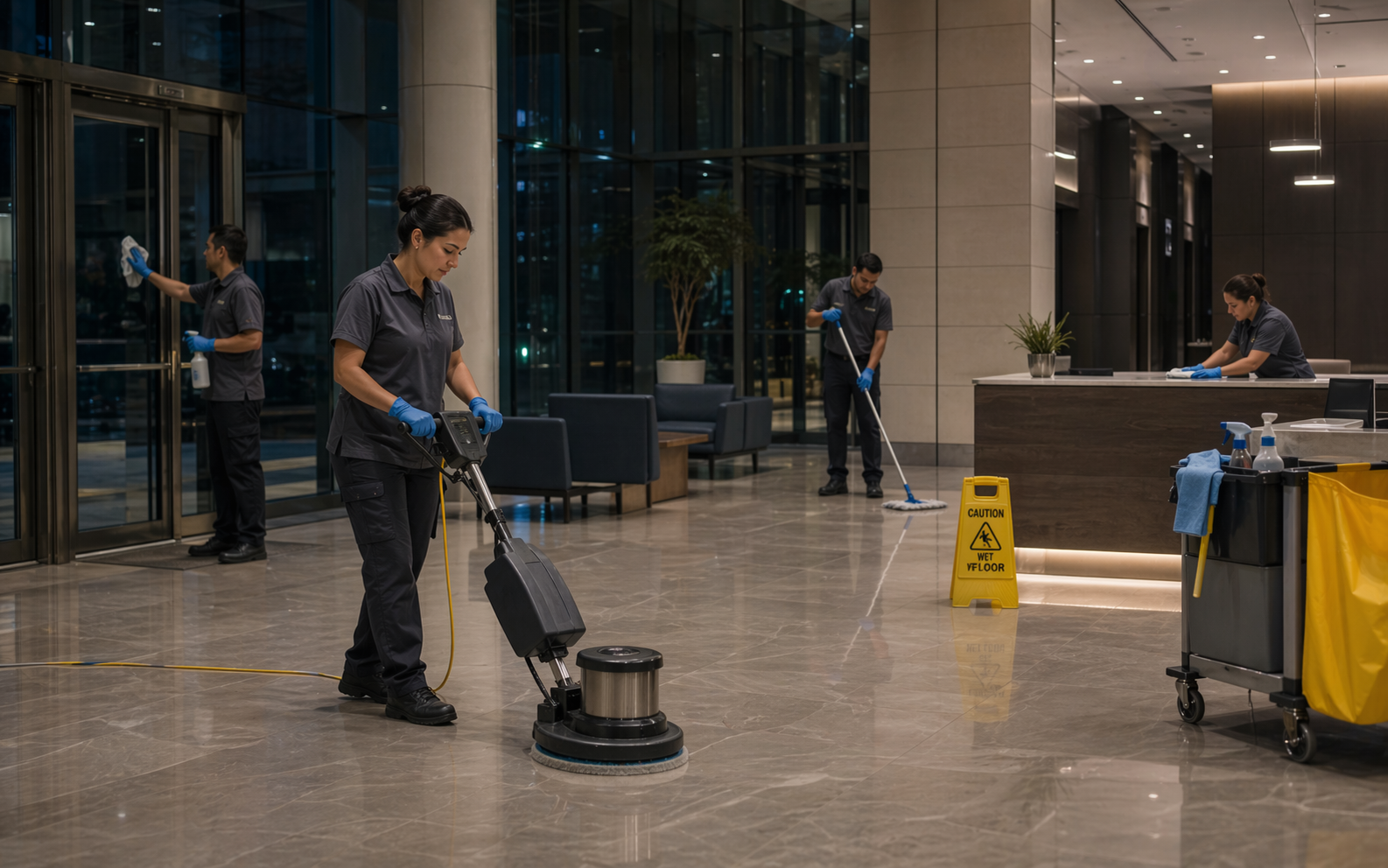
Lobbies and common areas create the first impression for every visitor, client, and employee who enters the building. These areas should be the highest quality in the entire facility.
- Entrance and Door Glass — Are entrance doors clean inside and out? Are door handles wiped clean? Are glass sidelights free of fingerprints and smudges? Check at eye level and at handle height
- Lobby Floors — Are floors clean, polished, and free of scuff marks? Is the entrance mat clean and properly positioned? Look for tracked-in dirt patterns that indicate the mat needs cleaning or replacement
- Elevator Areas — Are elevator cab floors clean? Are elevator doors and frames wiped? Are call buttons clean? Check elevator cab walls and handrails for smudges
- Reception Desk — Is the reception counter clean? Are all surfaces wiped? Is the area around the desk vacuumed and presentable?
- Seating Areas — Are lobby chairs and sofas free of debris and stains? Are coffee tables and end tables wiped clean? Are any magazines or reading materials straightened?
- Directories and Signage — Are building directories and signs free of dust and fingerprints? Are these cleaned regularly or only during deep cleaning visits?
Break Room and Kitchen Inspection
Break rooms generate strong opinions from building occupants. A clean break room improves morale; a dirty one generates complaints faster than any other area.
- Countertops and Tables — Are all food-preparation surfaces wiped clean and sanitized? Are dining tables clean? Check edges and undersides for sticky residue
- Sink — Is the sink clean and free of food debris? Is the faucet polished? Is the area around the sink base dry and clean? Check the drain strainer
- Appliance Exteriors — Are microwave, refrigerator, and coffeemaker exteriors wiped clean? Note: interior appliance cleaning is typically NOT included in standard janitorial contracts unless specifically stated. If it is included, check interior cleanliness
- Floors — Are break room floors swept and mopped? Check under tables and along baseboards. Break room floors accumulate food debris quickly and should show evidence of thorough mopping, not just a quick pass
- Trash and Recycling — Are all bins emptied? Are compost bins emptied (if applicable)? Is the trash area clean — no spills or debris around the bins?
- Supplies — Are paper towels, dish soap, and other common supplies stocked (if this is in the cleaning company's scope)?
What to Do with Your Inspection Results
The inspection checklist is only useful if you act on the results. Here's how to turn scores into improvement:
- Score Above 4.0 — Your cleaning program is performing well. Share positive feedback with the vendor — good crews deserve recognition. Continue quarterly inspections to maintain consistency
- Score 3.0–3.9 — Some areas need attention. Share the specific inspection results with your cleaning vendor's account manager and request a corrective action plan within 7 days. Re-inspect the deficient areas within 2 weeks. If scores don't improve within 30 days, escalate to management
- Score Below 3.0 — Significant quality issues exist. Schedule an immediate meeting with the vendor's operations manager (not just the salesperson). Present documented deficiencies with photos. Request a formal remediation plan with specific timelines and accountability. If scores remain below 3.0 for two consecutive inspections, begin evaluating alternative vendors
- Track Trends — Monthly or quarterly scores over time reveal whether quality is stable, improving, or degrading. A slow decline is the most common pattern and is easy to miss without tracking. If scores drop 0.5 points or more over 3 months, address it proactively before the decline accelerates