This guide is part of our Commercial Cleaning Services resource library — helping facility managers stay compliant across OSHA, HIPAA, CMS, and state regulations.
What Is Office Cleaning?
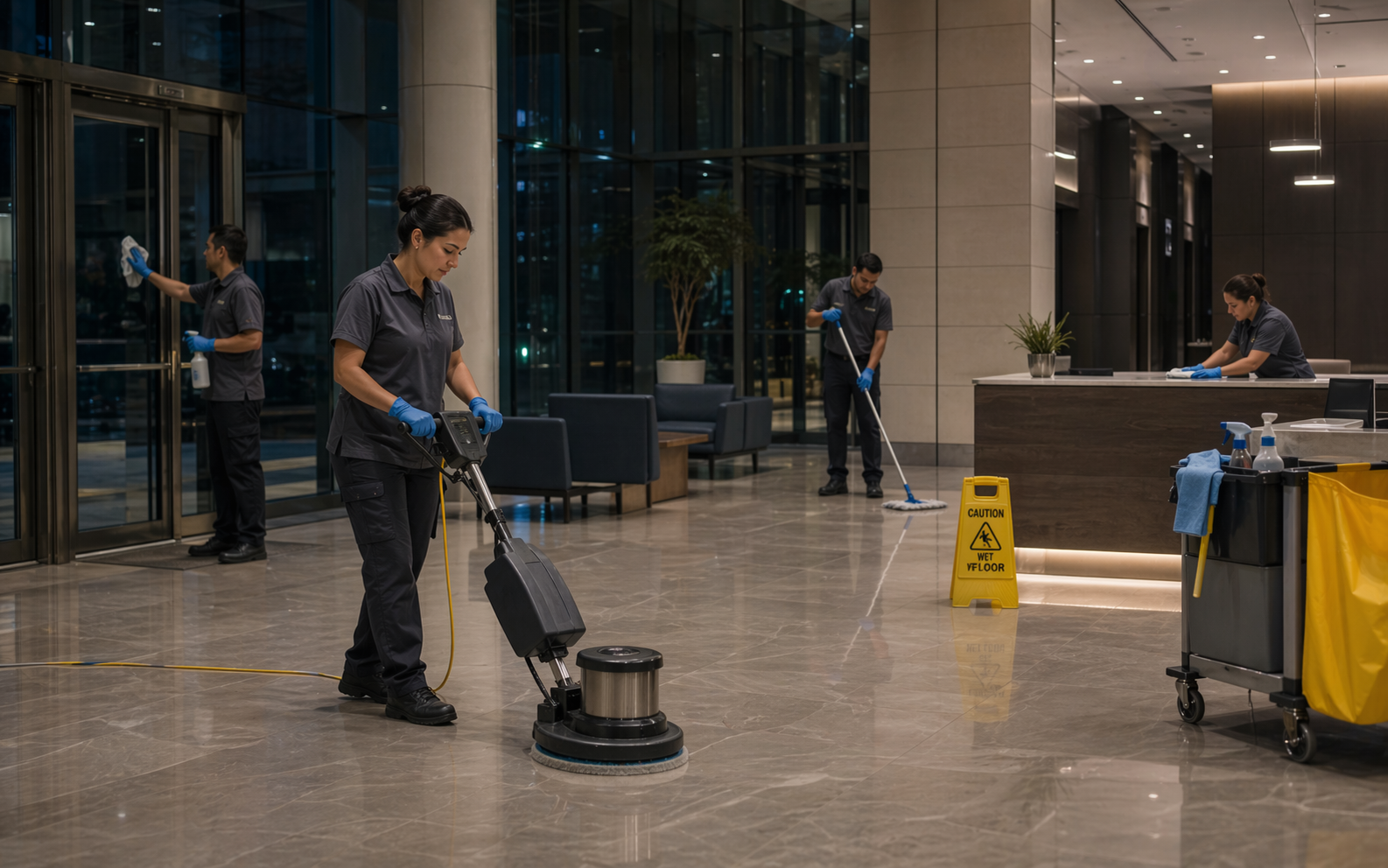
**Office cleaning** is the routine professional maintenance of workplace environments including offices, conference rooms, restrooms, break rooms, lobbies, and common areas. It encompasses daily tasks like trash removal and surface wiping, as well as periodic services like carpet cleaning, floor waxing, and window washing. Professional office cleaning maintains a healthy work environment, reduces employee sick days, and creates a professional impression for clients and visitors. Research from the International Facility Management Association (IFMA) shows that a clean workplace can improve employee productivity by up to 5% and reduce sick days by 46%.
What Does Standard Office Cleaning Include?
A standard office cleaning scope covers the tasks performed during each visit. The specific scope should be customized to your facility, but these are the baseline services most offices need:
- Trash & Recycling — Empty all wastebaskets, replace liners, transport to dumpster or designated collection point. Includes recycling sorting where applicable
- Restroom Sanitization — Clean and disinfect toilets, urinals, sinks, and mirrors. Restock paper towels, toilet paper, and hand soap. Mop floors with disinfectant. Empty sanitary bins
- Surface Wiping — Wipe desks, countertops, door handles, light switches, elevator buttons, and other high-touch surfaces with EPA-registered disinfectant
- Vacuuming — Vacuum all carpeted areas including under accessible furniture, along baseboards, and in corners. Use HEPA-filtered vacuums for better air quality
- Mopping — Damp-mop all hard floor surfaces including lobbies, hallways, kitchens, and restrooms
- Break Room/Kitchen — Wipe counters, clean sink and faucet, wipe exterior of appliances (microwave, refrigerator, coffee maker), empty trash, sweep and mop floors
- Dusting — Dust horizontal surfaces, picture frames, windowsills, and vents. Typically weekly rather than with every visit
Additional Services Beyond Basic Cleaning
Beyond standard nightly cleaning, most offices need periodic specialized services to maintain the facility properly. These are typically quoted separately or included in a comprehensive facility management agreement.
- Floor Care — Strip and wax for VCT tile (quarterly), carpet extraction and spot treatment (semi-annually), burnishing or buffing for high-gloss finishes (monthly). This is the single most impactful service for making an office look professionally maintained
- Window Cleaning — Interior glass monthly, exterior windows quarterly. Clean windows dramatically improve natural light and office appearance
- Day Porter Services — Daytime staff for high-traffic offices handling restroom restocking, lobby maintenance, conference room resets, and spill response. Essential for offices with 50+ employees or regular client visitors
- Deep Cleaning — Thorough cleaning of all surfaces including behind furniture, inside cabinets, air vents, and light fixtures. Typically scheduled quarterly or semi-annually
- Carpet & Upholstery Cleaning — Professional extraction cleaning for carpets and fabric furniture. Removes deep-seated dirt, allergens, and stains that vacuuming can't reach
- Pressure Washing — Exterior cleaning of building entrance, sidewalks, parking areas, and dumpster pads. Typically seasonal or quarterly
How Often Should You Clean Your Office?
The right cleaning frequency depends on your headcount, industry, foot traffic, and client-facing needs. Under-cleaning leads to health issues and poor impressions; over-cleaning wastes money. Here's a data-driven framework:
- Small Office (1–10 employees, minimal client traffic): 2–3x per week. Focus on restrooms, trash, and kitchen. Surfaces and vacuuming with each visit
- Medium Office (11–50 employees, regular client visits): 3–5x per week. Daily restroom service is non-negotiable. Vacuuming and mopping with each visit. Weekly dusting
- Large Office (50+ employees): 5x per week (nightly). Full-scope service every visit. Day porter for daytime maintenance if client-facing
- Medical Office (any size): 5–7x per week. Regulatory requirements mandate consistent terminal disinfection. Nightly cleaning is the minimum
- Client-Facing Lobby/Reception: Every business day, regardless of overall office cleaning frequency. First impressions happen here
How Much Does Office Cleaning Cost?
Office cleaning costs vary by location, building size, scope, and frequency. These ranges reflect 2026 market rates for the New York metro area, which are approximately 15–25% higher than national averages.
- Per Square Foot: $0.08–$0.20 per visit for standard office cleaning. Higher for medical, dental, and specialized facilities
- Small Office (under 3,000 sqft): $300–$800/month for 3x/week service
- Medium Office (3,000–10,000 sqft): $800–$2,500/month for 3–5x/week service
- Large Office (10,000–25,000 sqft): $2,500–$5,500/month for 5x/week service
- Day Porter (add-on): $2,500–$4,500/month for a full-time daytime porter
- Floor Care (add-on): $0.15–$0.40/sqft per event for strip-and-wax; $0.10–$0.25/sqft for carpet extraction
In-House Cleaning Staff vs. Outsourced Cleaning Company
The decision to hire your own cleaners or outsource to a cleaning company depends on your facility size, budget, and management bandwidth. Here's an honest comparison:
- In-House Pros: Full control over the cleaning team, consistent familiar staff, can handle immediate requests during business hours, easier to integrate into company culture
- In-House Cons: You're responsible for hiring, training, background checks, payroll taxes, workers' comp, equipment purchasing, chemical purchasing, managing call-outs, vacation coverage, and terminations. A single full-time cleaner costs $35,000–$50,000/year fully loaded — before equipment and supplies
- Outsourced Pros: No HR burden, insurance and workers' comp covered by the vendor, backup coverage for call-outs, access to specialized equipment and training, easier to scale up or down
- Outsourced Cons: Less direct control, potential for inconsistent crews if turnover is high, quality depends on vendor's management systems
- The Break-Even Point: For most offices, outsourcing makes financial sense at any size. The administrative burden of managing even one employee (payroll, compliance, coverage, equipment) typically exceeds the premium charged by a professional cleaning company
How to Verify Your Office Was Actually Cleaned
Paying for cleaning and getting cleaning done properly are two different things. The industry's dirty secret is that quality verification has historically been nonexistent — you pay a monthly bill and hope for the best. Modern solutions have changed this.
- NFC Zone Verification — Physical NFC tags installed in each room or zone that cleaners must scan with their phone during service. Creates a timestamped digital record proving every area was visited. Eliminates the possibility of skipping rooms
- Nightly Photo Reports — Cleaning crews photograph completed areas and submit via app. Building management receives visual proof before morning. Most effective for high-priority areas like lobbies and restrooms
- Independent Night Manager Audits — A third-party inspector (not employed by the cleaning company) visits after cleaning to grade quality. Eliminates the conflict of interest in self-reported results
- Morning Reports — Automated daily email to building management summarizing what was cleaned, what was flagged, and any maintenance issues observed during cleaning. Turns reactive management into proactive management
- GPS Time-on-Site Tracking — Confirms the crew arrived, how long they stayed, and when they left. Detects shortened visits and no-shows before you discover them yourself
Creating a Healthy Office Environment
Office cleaning isn't just about aesthetics — it directly impacts employee health and productivity. The EPA estimates that indoor air quality issues cost U.S. businesses $168 billion annually in lost productivity.
- High-Touch Surface Disinfection — Door handles, elevator buttons, shared keyboards, phones, and break room surfaces are the primary vectors for illness transmission. These should be disinfected with every cleaning visit
- HEPA Filtration — Vacuums with HEPA filters capture 99.97% of particles down to 0.3 microns, including dust mites, pollen, and bacteria. Standard vacuums recirculate these particles back into the air
- Green Cleaning Products — EPA Safer Choice or Green Seal certified products reduce chemical exposure for employees while still providing effective cleaning. Particularly important in enclosed office environments with limited ventilation
- Air Quality Maintenance — Regular HVAC filter changes, vent cleaning, and humidity control prevent mold growth and reduce airborne allergens. ASHRAE recommends changing HVAC filters every 1–3 months in commercial buildings
- Restroom Hygiene — Restrooms are the #1 source of employee complaints about office cleanliness. Touch-free fixtures, consistent restocking, and daily disinfection are table stakes